Main stage of an international technology conference, one speaker on stage in front of a full auditorium

Meet the people worth meeting

You bought a booth.
Not a pipeline.

Asia-Pacific event strategy for Western AI and infrastructure companies. Which events in Tokyo, Shanghai, Singapore and Sydney actually hold your buyers, who to line up before you land, and how the leads get back into your CRM with attribution that survives a QBR.

~100B2B events run end to end: conferences, summits, developer workshops and meetups
5 marketsJapan, Australia, Singapore, the United States and mainland China, with full on-the-ground delivery in each
4% → 32%Share of pipeline correctly attributed to events at one company, after discounting inbound and self-serve signups

APAC is not a translation of your US playbook

The budget is rarely the problem. The problem is that nobody owns the path from “our people flew there” to “this opportunity came from that event.” It breaks in the same three places every time.

Before · Selection

Brand recognition is a bad proxy in Asia

AWS Summit Tokyo is not AWS Summit Las Vegas, and the largest AI conference in Shanghai may hold almost none of your buyers. Picking by logo size gets you a room full of people who will never buy.

On site · Execution

Your team flies fourteen hours to stand behind a table

No pre-booked meetings, no route through the floor. In Japan, most attendees will not hand you a card unless someone introduced you first. Without that groundwork the booth is an expensive place to wait.

After · Attribution

The leads arrive late, in a language your ops team can’t read

Badge scans land as a CSV three weeks later. In China the real leads are in WeChat and never touched email at all. Nothing gets sourced, and the next budget conversation runs on booth traffic counts.

What one deliverable actually looks like

This is the output of the selection stage, one card per event. Not “considerations to keep in mind” — go or don’t go, and if you go, where the money should sit.

A speaker presenting to a darkened conference hall in front of a large screen
The same budget buys either a booth nobody walks past, or twenty conversations that happen sitting down.
Event scorecard · sample 64/100

AWS Summit Tokyo

Tokyo · June · Enterprise & platform engineering
Buyer density71 / 100
Access to the stageSponsor-only
Sponsorship value¥3.5M+
Lead captureBadge scan
AttributionCSV, 2–3 wks
Verdict

Go, but do not buy the speaking slot. It is sponsor-gated and the audience rotates out. Put the money into a booth plus a private dinner the night before, and have your SE brief three named accounts instead of a room.

The four-checkpoint method

Selection, pre-event, on site, after. The numbers are a real timeline, not a layout device. Each checkpoint has one deliverable you can sign off on.

01T–90

Selection: density over prestige

One test decides whether an event is worth attending: will your buyers be in that room, as speakers or as attendees. The biggest conferences usually score worst on this, because everyone goes.

DeliverableScorecard per event, five dimensions, plus a go / no-go call
02T–21

Pre-event: name the people, not the headcount

Score the published attendee, exhibitor and speaker lists in full, then rank the top fifty. The job is to have the meetings booked before anyone boards a plane, not to hope the right person walks by.

DeliverableTop 50 target list, per-person outreach copy, booking tracker
03Day 0–3

On site: the route is the sales process

Three days broken into slots, each one naming who goes where, meets whom, and opens with what. The booth is an anchor. The conversions happen between sessions, at side events and over dinner.

DeliverablePer-person hourly route, lead capture standard, same-day collection
04T+3

After: attribution has a 72-hour window

Scoring, dedupe, routing, CRM import and source tagging all have to finish inside three days. After that your reps’ memory and the buyer’s interest decay together, and no amount of retroactive tagging brings them back.

The report discounts itself on purpose: organic and self-serve signups come out, deals your team already worked get listed separately. A flattering number this year becomes your target next year.

DeliverableRouted lead file, CRM attribution spec, discounted pipeline report

Three engagements I can talk about

Client and product names removed. The numbers are actual delivered results, already discounted — organic traffic and self-serve signups are excluded.

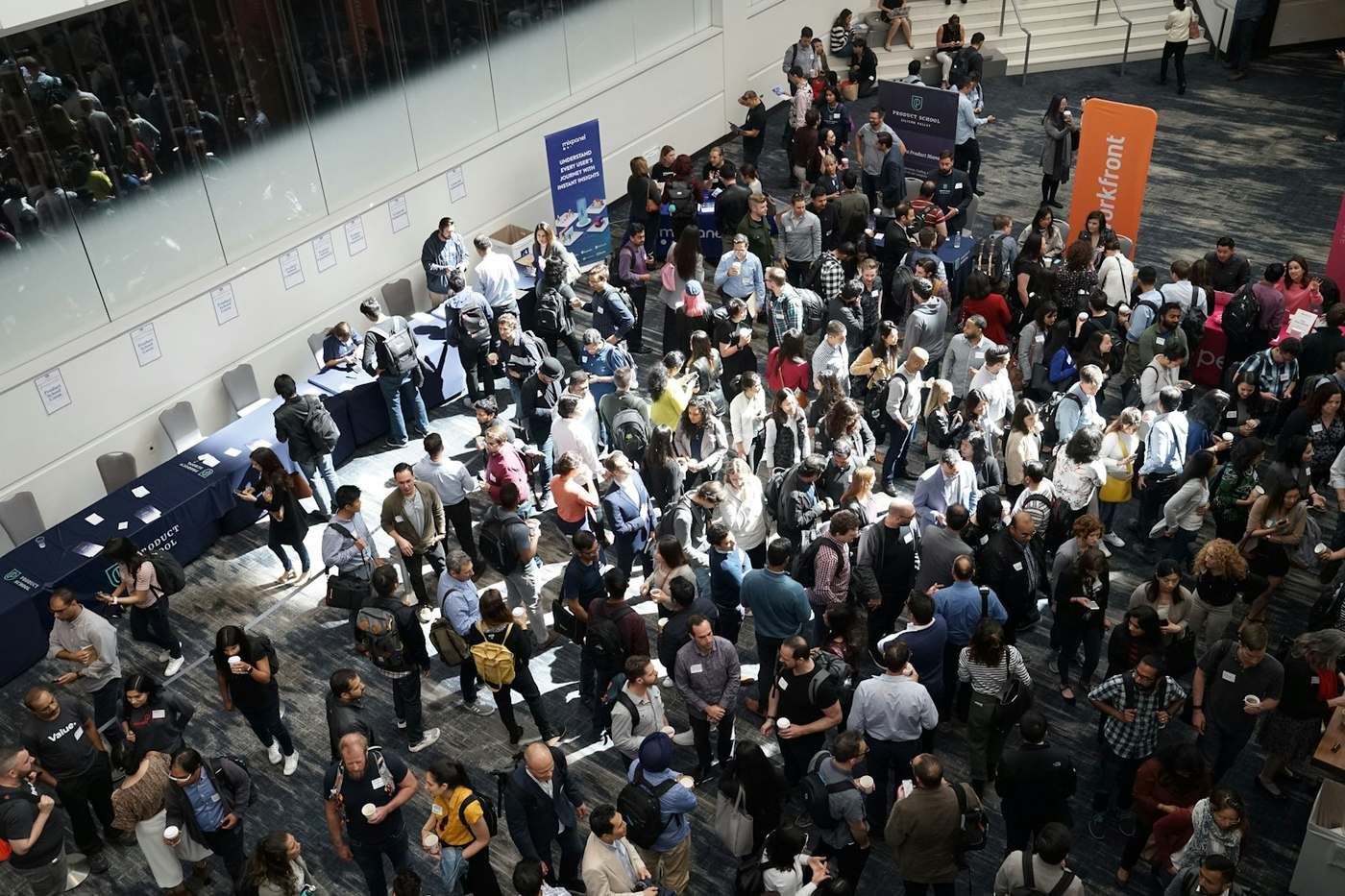
Overhead view of a crowded expo floor
Japan · Cloud vendor summit

First large-scale Japan appearance for an AI infrastructure company

130qualified leads
20real opportunities
4on a competitor

Every exhibitor and speaker was scored before the show to produce a must-meet list. On the floor we identified the largest competitive migration pool in the market, which became the region’s primary motion for the following fiscal year. The bilingual debrief went straight into the global quarterly review.

Attendees networking in a backlit conference hall
Australia · Cloud vendor summit

Turning badge scans into two meetings booked on the floor

106leads into CRM
3opportunities
2meetings on site

A prize-draw QR code created a second capture channel alongside the official badge scan. Anyone who appeared in both channels was the strongest intent signal available, and director-plus share of that group doubled. Everything was collected same-day and routed the next morning.

Silhouetted audience in a darkened conference hall
Shanghai · Flagship AI conference

No booth, no sponsorship — just a list and a route

1,010exhibitors scored
1,756speakers assessed
3day route plan

Every exhibitor and speaker was scored in advance, producing a hall-by-hall route the team walked with a named list. Total cost was a handful of entry tickets, and it out-produced a six-figure sponsorship at a comparable event the same quarter.

Fixed scope, fixed fee, no day rates

You know what you are getting before you commit, and I know what I have to do. No change orders, no overage, no “that wasn’t in scope.”

Event already chosen

Single event

$4,800 / event
  • Before Full scoring of attendee and exhibitor lists, top 50 targets with outreach copy
  • On site Three-day route by person and time slot, ready for your team to work
  • After Lead scoring, dedupe and routing, plus CRM import template and source-tagging spec
  • Debrief One-page outcome report with discounted pipeline numbers
Talk about this one
Most companies start here

Annual retainer

$29,000 / year
  • Includes the market calendar and four single-event engagements
  • Monthly review Event-sourced pipeline tracked on one consistent definition, ready for the QBR
  • Handover Scorecards, route templates and the attribution spec go to your team, so year two runs without me
  • Reachable all year, no incremental billing
Book a review
Still deciding where to go

APAC market calendar

$7,800
  • Candidate pool Every comparable event across Japan, China, Korea, SEA and ANZ, narrowed to thirty to fifty
  • Scorecards Five dimensions each: buyer density, stage access, sponsorship value, lead capture, attribution
  • Budget split How many to attend, what each should cost, which ones to walk rather than sponsor
  • Success criteria Defined per event in advance, so the debrief isn’t written backwards
Talk about the year

The first step is free

Send me the three APAC events you are considering. In thirty minutes I will tell you which one is worth it, which one is a trap, and what each requires. No deposit, nothing to sign. If I think I can’t help, I will say so.

Start

I am not an event agency

Agencies sell booths, build-out and collateral. I sell judgment and attribution — which events, which people, and how it gets counted afterwards. No agency does those three things, because none of them generate build-out fees.

For the past three years I have run Asia-Pacific field marketing for a global AI infrastructure company: roughly a hundred B2B events across Japan, Australia, Singapore and mainland China, plus ownership of how event-sourced leads landed in the CRM and how the pipeline contribution was calculated.

I know which three line items in a six-figure sponsorship package are pure waste, why Japanese buyers won’t leave contact details at a booth, and what an undiscounted event ROI report looks like to a CFO who has seen a few.

What I don’t do
  • No booth build-out, collateral design or swag procurement
  • No running your social accounts or communities
  • No promises on lead volume — only on deliverables
  • Never two companies in the same category at the same time

Four clients at a time, maximum. Not a posture: target lists and floor routes are built by one person, and there isn’t a fifth in the week.

How is this different from our APAC agency?

They make the event happen; I make it produce. The two coexist. If you already have an agency handling logistics, I don’t touch it — I decide who should be on stage, who your team should meet, and how it gets counted when everyone flies home.

Do you handle the language side?

I work in English and Chinese and bring in local partners for Japanese and Korean interpretation and copy. What I provide is the operating system: the selection logic, the target lists, the route and the attribution spec. Language is a solved problem locally; judgment is not.

Our CRM is Salesforce, not HubSpot.

Fine. The attribution spec is CRM-agnostic — source definitions, dedupe rules, routing logic and the fields you need. I have implemented it in HubSpot end to end and will hand your ops team a spec they can build from in a day.

Can we buy just the post-event part?

Yes, but expect a discount on the outcome. Whether you can attribute after the event depends on tagging you set up before it. If the event is already over, I will tell you how much is recoverable before deciding whether to take the work.

Can you guarantee a lead number?

No, and I won’t. Lead volume depends on the event’s own traffic and your product’s maturity, and I control neither. What I commit to is the process: what gets delivered at each checkpoint, and when. That is the line between a consultant and a vendor.
Start with a free event review

Tell me what you are considering. Within two business days you get a first read: which events are worth it, which are traps, and what each one requires.

Goes to me only. No list, no sequence.